Case Study
How the University of Illinois Chicago uses the power of why in its internship course
A UIC internship course rooted in MCode For Students helps students answer the question “What is your why?” to build strong resumes, stand out in interviews, and land job offers.
Helping students tell their stories
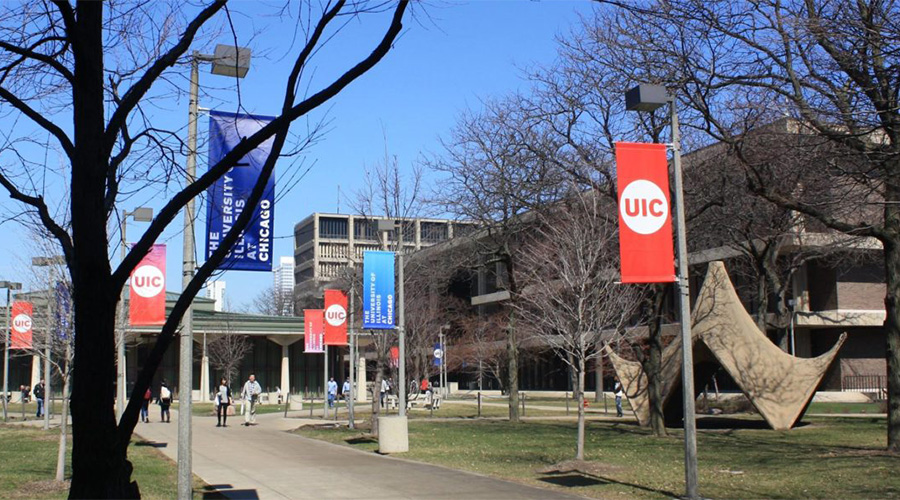
University of Illinois Chicago (UIC) is one of the nation’s most diverse public research universities, enrolling mostly first-generation and low-income college students.
Within UIC’s College of Liberal Arts and Sciences, which serves nearly 10,000 students, Assistant Director of Career Development and Internships Lauren Gallagher teaches a one-semester internship course for exploratory students. Drawing on her counseling background, Lauren leans heavily into a mix of assessments and personal storytelling, which she’s found powerful for boosting student engagement and strengthening resumes, LinkedIn profiles, and job interviews.
The first stage of her course focuses on professional identity, the mix of interests, skills, values, personality, and motivations each student brings to the table. Career Services only works for UIC’s diverse student body when it starts with the individual.
The gap MCode For Students filled
Gallagher wants her students to own their stories, understand their value, and see where they fit so they can flourish in their chosen career paths.
In working with students, she found that most couldn’t articulate their life’s purpose through their own stories. When she asked, “What is your why?,” most students would mumble something general about helping others or wanting to make money. They didn’t have a decisive, authentic, or memorable response.
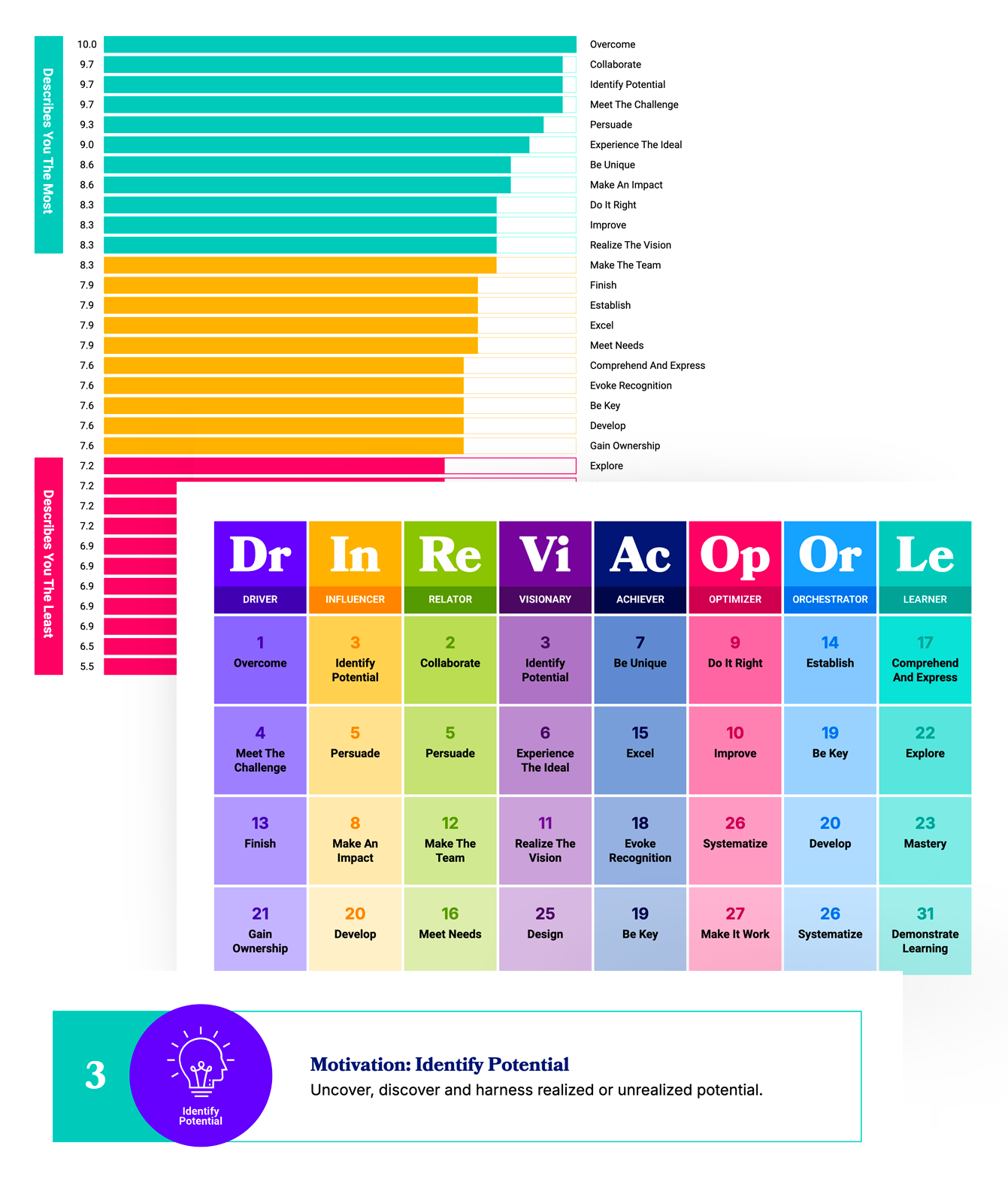
MCode For Students filled that gap, giving students tangible handles for understanding their inner drives and connecting them to the workplace.
As she explains, “I’ve used Myers-Briggs Type Indicator and Strong Interest Inventory in my class, but always felt like something was missing. I would supplement with my own little homegrown values assessment because I always felt that the why was really the most important piece that we should be focusing on.”
She kept her other assessments and added MCode For Students alongside them to give students a richer, multi-angle view of themselves. “The more data that we can bring to our students, the better,” she says. After examining the science behind the assessment and experiencing it herself, Gallagher brought it into the course to help students tell their why stories.
How motivations carried one student into a full-time role
Johari is one of Gallagher’s students who not only excelled in his internship at Charles Schwab, but landed a full-time offer as a result. His own words capture how his motivations show up at work.
“Over the course of my internship, I was able to use my top two Motivations, take charge and make an impact by leading group huddles — weekly team meetings for group projects, and mentoring the new interns who came in each week.
The thing that I like most about my Motivations is that they keep me grounded. Whenever I start to feel stressed or question myself at my job, I just think about those Motivations, and they help me think about my long-term goals.
As far as career competency goes, I would say that career and self-development were the areas I was the strongest in. Usually, I’m not an outgoing person — I don’t really like reaching out to people, but I felt like I did a great job of building my network and making those connections. Within the internship, I actually took it upon myself to set up one-on-one meetings with managers of different departments. With the manager of the trading department, I was able to get an interview and secure a full-time role. That was one of my biggest accomplishments.”
Grounded in his core motivations, Johari’s first-generation background and lower GPA didn’t hold him back. He converted his internship into a full-time offer.
The storytelling foundation
Gallagher’s internship course runs one semester for one to three credits, meets online and synchronously, and covers five sessions. She devotes the entire second session to storytelling. Students complete the MCode For Students assessment beforehand and bring their reports to class. From there, she teaches them how to express their Motivations through authentic narratives and connect those stories to career readiness.
She uses Flip for virtual video conversations where students share their stories, name their Motivations, and engage with their classmates.
“Stories are just data with a soul,” as Brené Brown puts it. Gallagher takes that idea seriously, weaving stories through every step of the course. As she explains, “Motivational flow helps students understand what got me to say yes to this experience in the first place, what kept me involved in this experience, and then what was most satisfying for me after that.”
Six activities built on motivations
Gallagher weaves MCode For Students into six career-search activities throughout the course:
- Mining job descriptions for motivational clues.
Students use Handshake to search for jobs and internships, then look for overlap between the Motivations in their MCode For Students report and the job description wording. What captures their attention? What aspects would they want to continue with long-term? Which keywords echo their Motivations? Which work environments match their preferred settings? - Reaching out to alumni with personalized bids.
UIC’s alumni department uses People Grove to match students with alumni for mentoring, interviewing, and professional networking. Students have to make the first move, so the connection request needs to be impressive. Gallagher helps students use their Motivations as the framework for their video introduction, which earns more enthusiastic responses from busy alumni. - Optimizing LinkedIn profiles with the language of motivations.
Students swap stale descriptions like “psychology student at UIC” for language pulled directly from their MCode For Students report. As Gallagher explains, “What we do is we have students pull language from the characteristics and the contributions sections of their MCode For Students report to use in their LinkedIn headline and About section.” When students get stuck, she encourages them to lean on AI tools with prompts like, “Help me write a LinkedIn headline, incorporating my motivations,” or, “Help me incorporate my motivational statement or some of the characteristics and contributions from my report into my About section on LinkedIn.” - Energizing resume bullets with motivational language.
Gallagher trains students to translate language from their MCode For Students report into impactful resume bullet points, and nudges them toward AI tools when stuck on wording. - Gaining interview confidence with a motivational statement.
The course culminates in job interview role-plays. Gallagher preps students for the open-ended “Tell me about yourself” question with their Motivations. Using a motivational statement, students learn to articulate how their inner drives mesh with job requirements and tasks. - Bringing it all together in the internship showcase.
The capstone project is a showcase where students reflect on their built competencies and accomplishments. They present through a three-minute video, a digital slide deck with audio narration, or a blog post on the UIC website. Some students take over the UIC College of Liberal Arts and Sciences Instagram account — a win for both the college and the student.
The MCode For Students assessment is also easy on the instructor side.
As Gallagher puts it, “And one of the big pieces for me was that facilitating MCode For Students is really easy. I didn’t feel like I had to be an expert in all 32 motivations. I didn’t feel like I had to do hours and hours of training because fundamentally, the whole purpose is to get students to own their stories. And so working with the MCode For Students team has been incredible. They offer so many free resources and support.”
What’s next at UIC
Gallagher wants to take MCode For Students even further with her students.
As she explains, “I want students to recognize how these motivations are present, not just in their internships, but also in other aspects of their lives. What role do they take on in their friend group? With their family? And how can they start to see these patterns from several years ago so that they can better predict what might be coming next?”
She also plans to capture more data on the impact, including a pre- and post-assessment to quantify the results she’s seeing in the classroom.
Bring MCode For Students to your campus
MCode For Students is a story-based assessment that helps college students understand themselves, how they’re wired for success, and how they’re uniquely motivated. Personalized results empower students to articulate their value, show up at their best, choose the right major or career, and cultivate meaning, satisfaction, and fulfillment in their college experience, work, and everyday life.
Want to see an MCode For Students or MCode Premium report for yourself? Reach out to get started, see a demo, or take the assessment yourself for free!