Case Study
How UNWSP builds leadership from day one with MCode For Students
Incoming students at the University of Northwestern St. Paul take a required leadership course that helps them connect their Motivations to academics, vocation, and peer collaboration.
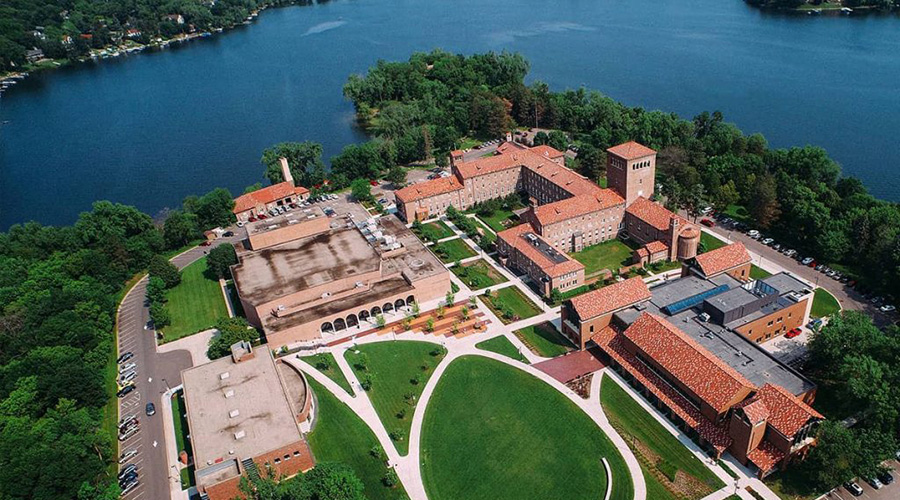
UNWSP prioritizes leadership
At the University of Northwestern St. Paul (UNW), leadership development isn’t just an elective — it’s a cornerstone of every student’s education. For the past five years, all incoming students have participated in a groundbreaking series of required courses, the first and last of which leverage the MCode For Students assessment, along with other assessments, to unlock their Motivations and support vocational clarity.
Originally called Leadership for Transformation, the course was renamed Spiritual and Personal Formation for Leadership in 2024, maintaining the same objective. As Dr. Megan G. Brown, Department Chair of Christian Ministries, explains, the course aims to help students understand how they’re wired and connect that self-understanding to vocational awareness.
Beyond traditional leadership training, this innovative program digs deeply into students’ core Motivations. Through in-class discussions, self-reflection exercises, and small group interactions, students gain insights into their own makeup and learn to appreciate the diverse Motivations of their peers.
How the assessment runs in class
Spiritual and Personal Formation for Leadership is taught by a team of adjunct and full-time professors. While each instructor at UNW approaches the use of MCode For Students a bit differently, Brown describes her approach:
- She prepares students for the assessment in class, covering its objectives and explaining how it works, including how to write three achievement stories and use a Likert scale to rank statements about those stories.
- Students then take the assessment outside of class.
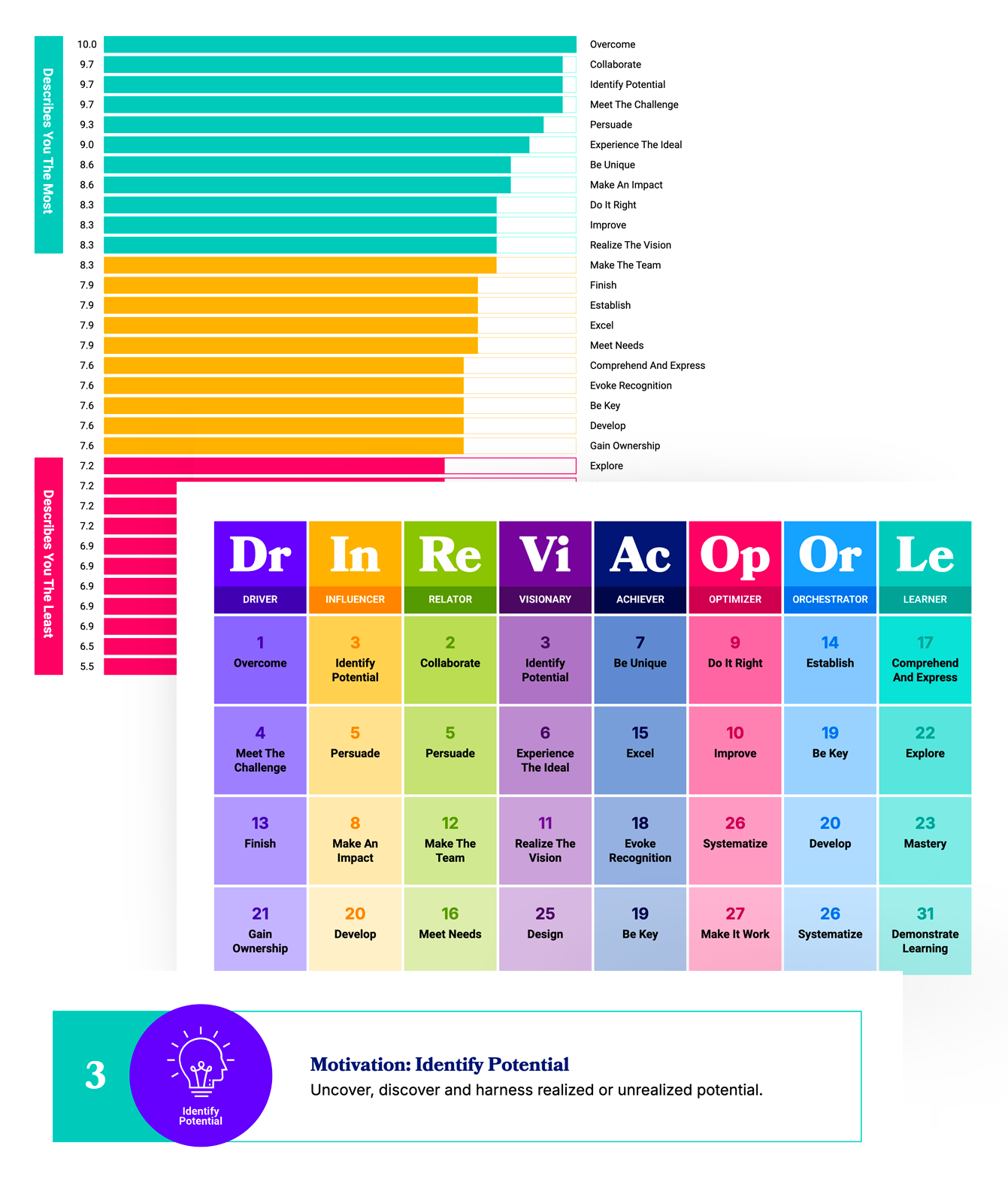
- Back in class, Brown spends two to three sessions on the 32 motivations and 8 Dimensions, how to understand the results, how shadow sides can arise, and how to apply the motivational insights in daily life.
The focus then shifts to careers and professional arenas. Students identify their Motivational Flow, write a motivational statement, and complete other application exercises. In small groups, they unpack their findings using a debrief guide that Career and Leadership Development created for the course. Students who want more individualized support can meet one-on-one for coaching.
Building self-awareness and a shared language
Another professor on the leadership course team emphasizes that the self-awareness MCode For Students creates extends beyond the self. He explains, “We lean into an awareness of how their classmates might have different motivations. So, in this self-awareness section of the course, it’s not just about understanding yourself but understanding others — the people that you work with.”
Brown reports that students tend to reflect positively on MCode For Students, making it one of the assessments students favor most in the course. She attributes that to timing. Students connect with the assessment “because it’s about where they are in life. Developmentally, college students are thinking about career and relationships and connecting with the people in their lives.”
Most students taking MCode For Students at UNW are traditional first-year students, so many haven’t done much introspective work in this kind of context before. As Brown puts it, the assessment “gives the students a picture of how they are at their best and gives them a ‘why.’ They can translate that image to what they are going to do next and how to relate to their peers.”
MCode For Students also gives students the language to explain themselves and ask for help.
After taking the assessment, students can say things like, “I really appreciate this,” or “I’m motivated by this, and that’s why I don’t really like X class or Y task, and I need someone to encourage or support me in those areas.”
Motivations as part of a divine design
Because UNW is a Christian institution, the leadership course sometimes leans into the idea that a student’s motivational makeup reflects hardwiring from a Creator. Brown is quick to point out that not all adjuncts take this direction, but she does. As she explains, “These Motivations are wired into them by a Creator and are not just some random collection of things that they love or don’t love.”
Applications in career advising and a senior capstone
In the Career and Leadership Development department, advisors use MCode For Students to help students recognize that motivations aren’t limiting or prescriptive.
As a career and leadership development coach puts it, “A single Motivation can actually show up in a lot of different career areas. And so, you don’t have to have a narrow or restricted formula that a particular motivation demands a specific kind of job.”
A capstone class toward the end of a student’s time at UNW builds on what students learned in the leadership course.
The capstone covers vocational identity and a theology of work, helping students wrestle with the idea that they have a calling or vocational identity connected to their core motivations, and that they can express that calling through many different occupational paths, activities, and parts of life. The capstone helps students see that they can live consistently with their motivational makeup in many different ways.
What’s next at UNW
Students leave the program with a clearer sense of their vocational identity, the language to articulate their motivations, and the tools to apply those insights in their daily lives and future careers. As they move through the rest of their academic journey, that foundation shapes how they collaborate, plan their careers, and grow as people.
Looking ahead, UNW sees an opportunity to bring MCode For Students results into academic advising, where the assessment could fuel more meaningful dialogue between advisors and students. UNW hasn’t rolled that out yet, but it’s a clear next step for getting more value from the campus partnership.

Bring MCode For Students to your campus
MCode For Students is a story-based assessment that helps college students understand themselves, how they’re wired for success, and how they’re uniquely motivated. Personalized results empower students to articulate their value, show up at their best, choose the right major or career, and cultivate meaning, satisfaction, and fulfillment in their college experience, work, and everyday life.
Want to see an MCode For Students or MCode Premium report for yourself? Reach out to get started, see a demo, or take the assessment yourself for free!